
)
Coach Derrick Murray gives you a spot-on guide on how to fuel for an Enduro race.
You’ve spent many months working on your aerobic base, doing high-intensity power workouts and perfecting your set-up, but have you been practising your nutrition strategy?
Studies have shown that enduro riders train on average 10-12 hr/week, most of that time spent in the aerobic zone, the so-called Z2 (80% MHR).
The body has a very good way of storing energy for use during exercise; if we accept that enduro mountain bike racing is mainly aerobic, I will focus mainly on carbohydrates as the major fuel source for competition.
To put it simply, carbohydrates are sugars and starches that fuel our bodies, keeping us alive when we sleep and fueling our athletic endeavours and daily lives when awake.
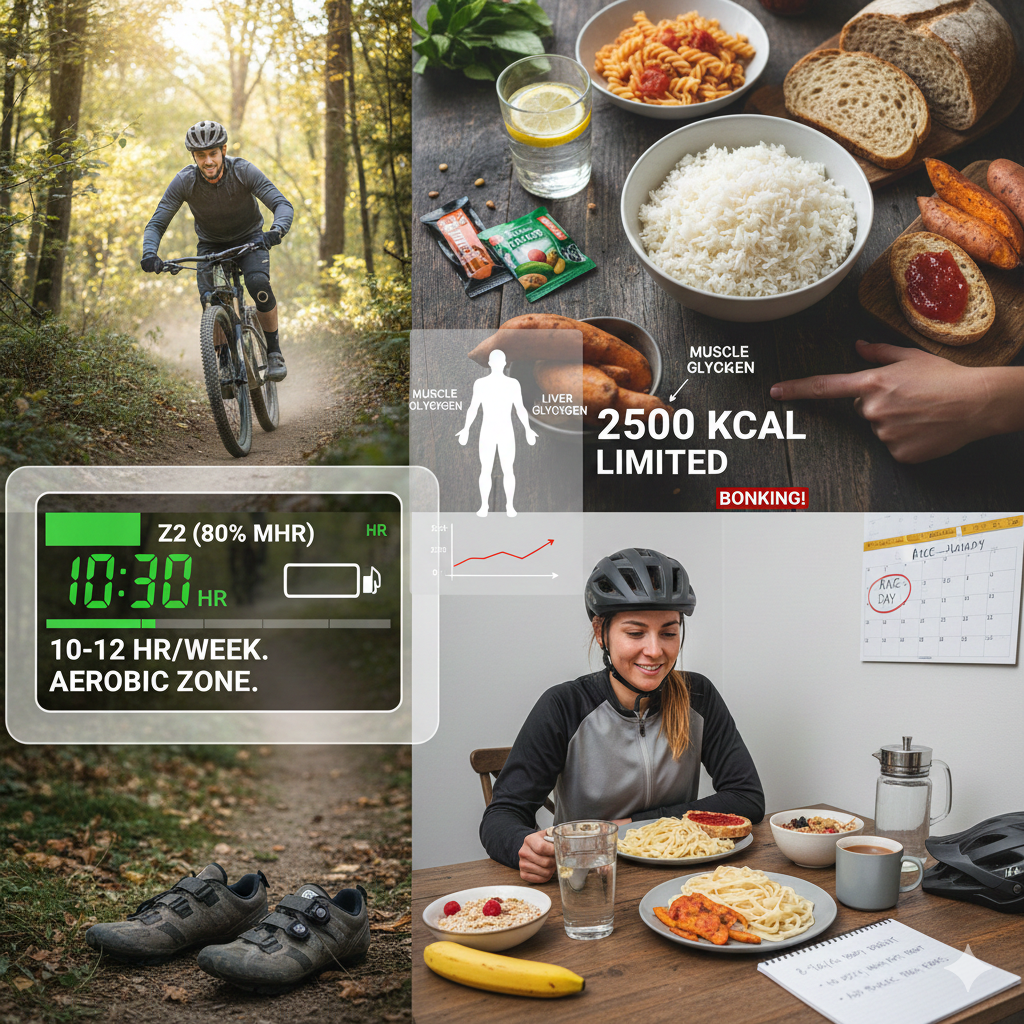
Our body converts consumed carbohydrates into glycogen, which is stored in the muscles and liver. The only problem with this stored fuel is that it’s limited to around 2500 kCal. This amount of glycogen supplies the energy needed to exercise for about 2 hours at a moderate intensity (80-85% MHR), making the addition of extra carbohydrates necessary during long efforts and races to avoid depletion and consequent dizziness (aka “bonking”) and profound muscle fatigue (aka “the wall”).
Each gram of carbohydrate contains about 4 calories of fuel. Athletes should aim to load their plates with 45-65% carbohydrate while meeting daily energy demands, and can expect to store about 4.2 grams (18 calories) of glycogen per kilogram of lean muscle tissue and an additional ~100-125 grams (400-500 calories) within the liver. This is why loading up with quality-based carbohydrates 2-3 days before an event is essential; this practice is more commonly known as “Carb Loading”.
Carbo Loading aims to keep our glycogen fuel tanks topped up to the max, thus allowing for optimum performance on race day. What you should not do during those 2-3 days of loading is binge-eat so much that you feel bloated and sick (been there, done that). I recommend you lay off spicy curries, high-fat and fibre foods, and some dairy products too.

So what can we eat? I hear you ask.
Lucky for you, white rice is an effective carb-loading choice because it is rich in carbohydrates and provides minimal fibre; white rice is fat-free, which is beneficial because fat slows down digestion; pasta, bread, grains, simple sugars, and root vegetables are all excellent sources of carbohydrates for loading. The aim is to eat as normal amounts as possible while reducing the training load; you can add a sandwich or snack 2-3 times a day to gain a few more calories. During this carb-loading period, 85-95 % of your calories should come from carbs.
It would help to increase your carbohydrate intake to 8-10g per kilogram of body weight (Anita Bean, The Complete Guide to Sports Nutrition, (A C & Black, 2003). It is worth pointing out that if you step on the scales while carb-loading, expect to be above your usual weight. With every gram of stored carbohydrate, you store an extra three grams of water, which means you will be well-fuelled and hydrated at the start line.

Related post

Pokhara Enduro Race trails
Pokhara Enduro race trails nestled within the arms of the Arba Hills greeted riders as the autumn tapestry unfolded its flaming hues, providing a test
Read More
How mountain bikers stay relevant during COVID-19 lockdown
Learn how five mountain bikers from Australia, Nepal, Singapore and Malaysia met over Zoom to find out ways to stay relevant in COVID-19. They deliberated
Read More